
Holiday Closing - Veterans Day
Our offices will be closed on Wednesday, November 11, for Veterans Day. Note: ACH, wires and mobile deposits do not get transmitted on federal holidays.
Business owners often face a frustrating paradox. Your books show a healthy profit, yet your cash sits tied up in unpaid invoices or unsold inventory and you're still scrambling to cover payroll. Profitability on paper does nothing for you if you can't access the money when you need it.
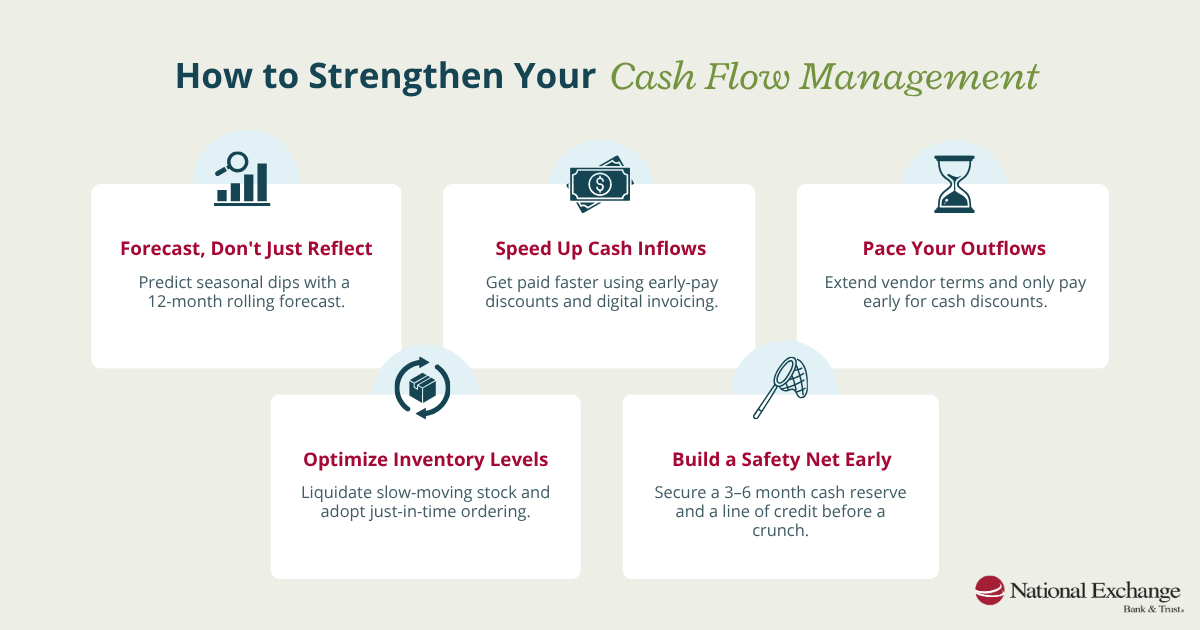
Managing cash flow in a business requires a proactive mindset. Unfortunately, many owners approach it reactively glancing at the bank balance each morning and reacting to whatever number they see. Effectively managing cash flow requires looking forward instead of backward. This guide walks you through a practical 5-step cash flow management process to speed up the cash coming in, pace the cash going out and build a safety net that holds up when conditions get tight.
You can't fix what you don't measure, and effective cash flow management relies on projected cash flow trends rather than last month's bank statement. A predictive view matters far more than a historical one.
Start by building a rolling 12-month cash flow forecast. Take a close look at past patterns in your revenue and expenses. Pair your knowledge of the past with known upcoming income and expenses to build your cash flow forecast. This helps you plan for seasonal shortages before they arrive rather than scrambling once they do. Performing a strategic mid-year financial check-up will help you spot deviations from forecasted to actual numbers, giving you time to adjust before cash gets tight.
Getting paid faster keeps your operations moving. Net-30 terms shouldn’t become a 45-day wait.
A few adjustments can make a noticeable difference:
While accelerating incoming payments matters, it’s just as important to keep cash on hand as long as possible without damaging vendor relationships. Consider negotiating longer payment terms with suppliers. Avoid paying bills early unless a vendor offers a meaningful discount for doing so, since early payment without an incentive drains your reserves for no benefit.
Excess inventory is essentially cash collecting dust on a shelf when it could be actively working for your business.
To release capital tied up in inventory:
The best time to secure financial backup is when your numbers look strong, well before you’re in a cash crunch.
Build a dedicated cash reserve equal to 3 - 6 months of operating expenses and treat it as untouchable outside of emergencies. Pairing that reserve with a flexible revolving credit tool, like a business line of credit, gives you room to bridge unexpected revenue gaps or slow billing cycles without scrambling for last-minute financing.
Proactive cash flow management is a continuous rhythm that determines how your business handles opportunity and setbacks. Planning today builds the resilience your business needs to grow tomorrow.
You don't have to navigate this alone. Reach out to your local NEBAT banker to tailor a cash management strategy for your business, designed around your industry and community.


 Loading

