

 Loading

A new year brings a fresh start — a chance to reset, refocus and build healthier habits. And while many resolutions fade by February, financial resolutions you commit to now can shape your entire year (and beyond).
At National Exchange Bank & Trust, we understand the impact that clear, achievable goals can have on your financial wellbeing. These practical financial resolutions for the new year are designed to help you reduce stress, build confidence and create lasting stability.
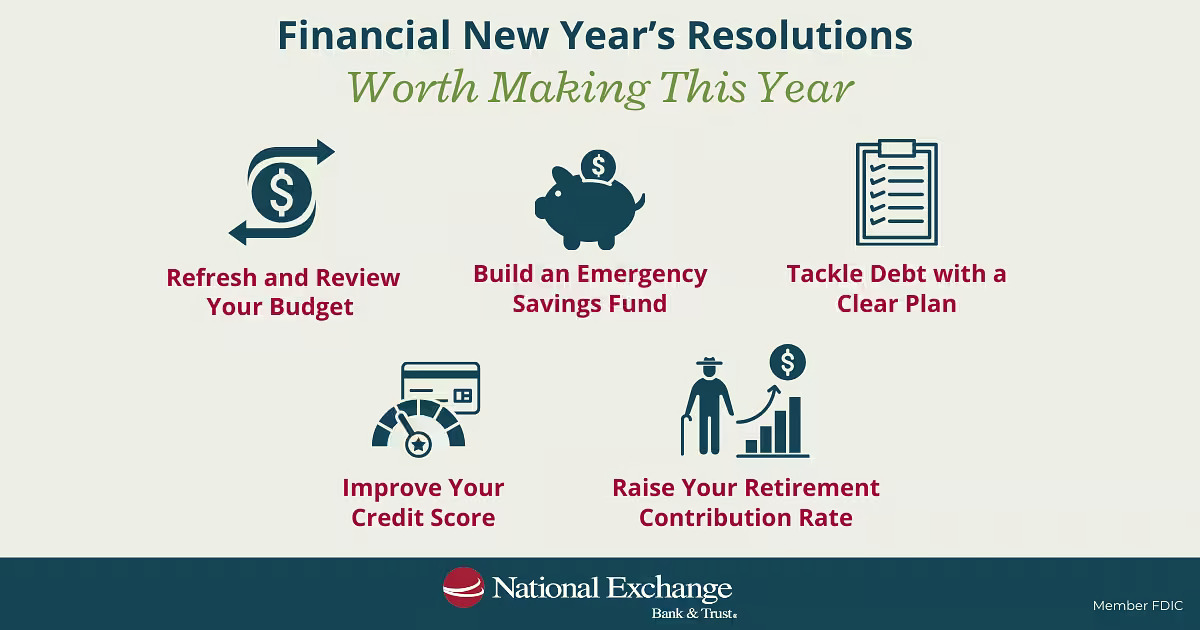
Review and Refresh Your Budget
A new year is the perfect time to make a financial resolution to take control of your money. Revisiting your budget helps ensure it aligns with your current lifestyle and priorities. Start by taking a fresh look at your monthly income, essential expenses and typical spending patterns. This simple review can uncover habits you may not have noticed and reveal opportunities to reallocate money toward what matters most.
Even tiny changes can add up over time. Consider these simple ways to save throughout the year:
- Cut daily coffee costs: Swap an expensive latte for an at home coffee.
- Plan meals ahead: Preparing meals in advance helps avoid last-minute takeout and keeps grocery spending under control.
- Limit impulse purchases: Make a “24-hour rule” before making non-essential purchases; delaying can reduce unnecessary spending.
- Buy generic or store brands: Many items, from pantry staples to cleaning supplies, are just as good as name brands but cost less.
These small habits can make a big difference over time, helping you save more and giving your budget a little extra breathing room throughout the year.
To simplify tracking your spending habits, setting goals, and spotting new opportunities to save, try using Financial Wellness, a digital money management tool available in Exchange OnLine and the mobile app.
Build an Emergency Savings Fund
Assess your budget and channel some funds into an emergency fund. Unexpected expenses like car repairs, medical bills and other surprises can come up at any time. That’s why setting a goal to build or strengthen your emergency fund is one of the smartest financial resolutions you can make. Saving money for emergencies now will help you save in the long run by not needing to use a credit card or other higher cost payment options.
Aim to save three to six months of essential expenses, but don’t let that number feel overwhelming. What matters most is consistency.
Try starting with:
- A small weekly or monthly transfer.
- Setting up automated deposits into a separate savings account.
- Saving windfalls like tax refunds or work bonuses.
Every contribution adds up and automation helps you stay committed throughout the year without needing to think about it.
Not sure where to start? Enroll in Exchange OnLine and use the Financial Wellness tool to build a customized emergency savings plan. The Savings Goal feature helps you stay on track to achieve your goal faster.
Tackle Debt with a Clear Plan
A thoughtful budget can do more than track spending; it can help you take control of your debt. By knowing exactly where your money goes each month, you can free up funds to pay down balances faster and make a realistic plan for decreasing debt and increasing wealth.
If debt is part of your financial picture, whether it’s credit cards, auto loans, student loans or personal loans, having a strategy can make all the difference.
Start by listing your debts, due dates and interest rates. Then choose a repayment approach that aligns with your goals:
- Snowball method: Pay off the smallest debt first to build momentum.
- Avalanche method: Prioritize debts with the highest interest rates to save more overtime.
- Consolidation options: Explore whether combining debts with something such as a Home Equity Line of Credit could simplify payments and decrease the interest you are paying.
Paying down debt not only reduces your financial stress, it also frees up money you can redirect toward savings, family needs or future plans like buying a home or taking a vacation.
Improve Your Credit Score
Your credit score plays a major role in your financial health, affecting everything from loan approvals to interest rates. The good news is that by managing your budget and debt wisely, you can take concrete steps to strengthen your credit over time.
Here are a few actionable steps that you can take to improve your credit:
- Check your credit report regularly: Review your report at least once a year to spot errors or inaccuracies that could be hurting your score.
- Pay bills on time: Timely payments are one of the biggest factors in maintaining and improving your credit. Consider setting up automatic payments or reminders.
- Reduce credit card balances: Keeping balances low relative to your credit limits can boost your score and improve your overall credit utilization.
- Limit new credit inquiries: Only apply for credit when necessary, as multiple hard inquiries in a short period can negatively impact your score.
- Use credit responsibly: Maintain a mix of credit types (credit cards, loans) and demonstrate consistent, responsible usage over time.
By taking these steps, you can make managing your credit easier than ever. Exchange OnLine and the NEBAT mobile banking app allow you to track your credit score through the Savvy Money connection. Staying on top of your credit through online tools helps you maintain financial flexibility, avoid surprises while confidently working toward your financial goals.
Raise Your Retirement Contribution Rate
Once your budget and debt plan are in place, consider boosting your retirement contributions - even a small increase can make a big difference over time. Automating contributions or increasing them incrementally each year helps you stay consistent and take advantage of compound growth, bringing your long-term financial goals within reach.
Here are some additional tips to make your retirement contributions more effective:
- Start small, increase gradually: Even a 1–2% increase in contributions can add up significantly over the years. Set a goal to raise your rate annually or whenever you get a raise.
- Take full advantage of employer matches: If your employer offers a 401(k) match, make sure you contribute at least enough to get the full match. It’s essentially free money toward your future.
- Consider tax-advantaged accounts: Explore options like traditional or Roth IRAs in addition to your workplace plan. Tax benefits can increase your retirement savings over time.
Increasing your retirement savings now is one of the most effective ways to secure your financial future. The earlier you start, the more time your money has to grow, turning even modest contributions into significant long-term savings. Consider opening an IRA to take advantage of tax benefits and grow your retirement savings even faster. Be sure to consult your tax advisor.
Financial Tools and Support to Help You Succeed
As you set your financial goals for the year ahead, know that you don’t have to do it alone.
National Exchange Bank & Trust offers a wide range of tools, education and personalized resources to help you build strong financial habits and stay on track throughout the year. Consider incorporating a few of these steps into your routine:
- Read articles or watch videos on financial basics.
- Participate in financial workshops or webinars.
- Use online tools to compare savings strategies.
- Speak with a financial professional about your goals.
Explore our financial tools and educational materials to make this your strongest financial year yet.

Wherever you are on your financial journey, our resources are here to help you plan confidently and make meaningful progress. National Exchange Bank & Trust also offers financial education presentations for schools, businesses, and community organizations. Contact your local office to learn more.
FAQs
What is the 50/30/20 Rule in Budgeting?
The 50/30/20 rule is a simple budgeting guideline that helps you manage your money effectively by dividing your after-tax income into three categories:
- 50% for Needs. These are essential expenses you must pay, such as rent or mortgage, utilities, groceries, transportation, insurance and minimum loan payments.
- 30% for Wants. This portion covers non-essential spending that improves your lifestyle, like dining out, entertainment, hobbies, travel or shopping.
- 20% for Savings and Debt Repayment. This part goes toward building financial security, including savings accounts, emergency funds, investments or paying down debt beyond minimum payments.
The 50/30/20 rule is popular because it’s straightforward, flexible and helps ensure you balance everyday expenses with long-term financial goals.
What’s the Difference between a Roth IRA vs Traditional IRA?
Traditional IRAs may allow tax-deductible contributions now, with taxes paid at withdrawal. Roth IRAs are funded with after-tax dollars, but withdrawals in retirement are tax-free. Both help grow retirement savings, but your choice depends on your current tax situation and future plans.
What is Debt Consolidation?
Debt consolidation is the process of combining multiple debts like credit cards, personal loans or medical bills into a single loan or payment plan. This can simplify your finances by giving you one monthly payment and may also lower your interest rate or reduce your monthly payment. It can help you manage debt more effectively, but it’s important to use it responsibly to avoid accumulating more debt.
