

 Loading

Growth is the goal for most business owners, but expansion isn’t always as simple as increasing revenue. As a business scales their operation, expenses often occur before income does, whether that’s inventory, payroll or the cost of taking on new opportunities.
Without the right business growth financing, even healthy growth can put pressure on cash flow and lead to overextension. Common challenges include:
- Inventory costs increase before products are sold or income is realized.
- Payroll and staffing expenses as teams expand.
- Seasonal fluctuations impact timing of revenue.
- Unexpected opportunities that require quick access to funds.
Without a clear strategy to manage these gaps, businesses may find themselves overextended or forced to pass on opportunities that could drive long-term success. Understanding these challenges is the first step; the next is knowing which financing tools are designed to address them.
In this guide, we’ll explore how a Working Capital Line of Credit offers a flexible way to support growth by helping businesses manage cash flow gaps, fund expansion and scale without overextending their finances.
What Is a Working Capital Line of Credit?
A Working Capital Line of Credit is a flexible, revolving financing option designed to help businesses manage short-term cash flow needs when they need it. Rather than receiving a one-time lump sum, your business is approved for a set credit limit that you can draw from as expenses arise and repay as revenue comes in.
Interest is only charged on the funds you use, not the full credit limit. As you repay borrowed amounts, those funds become available again, making a Working Capital Line of Credit an ongoing source of capital instead of a one-time loan. It is important to note that there are resting period requirements. For example, National Exchange Bank & Trust requires that the line of credit be brought to $0 for 30 days during the year.
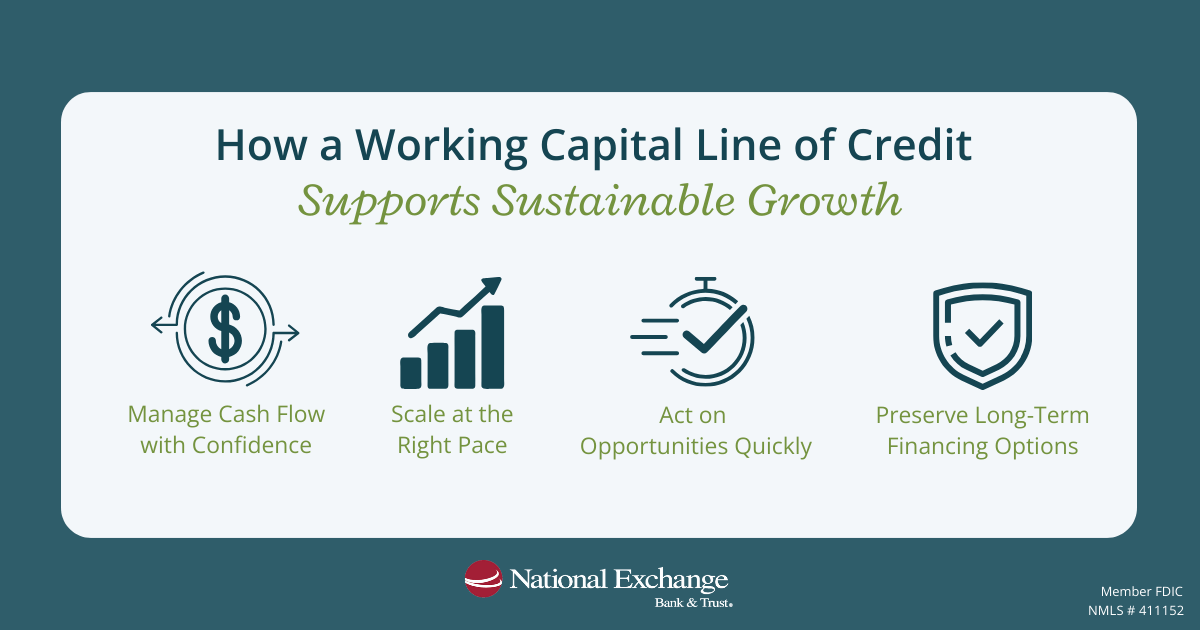
How a Line of Credit Supports Sustainable Growth
When used strategically, a Working Capital Line of Credit can be a powerful business growth financing tool.



While the benefits of a Working Capital Line of Credit are clear, it’s most effective when it aligns with your business’s cash flow patterns and growth strategy. Not every business needs the same type or level of financing; understanding how this tool fits into your operations is key to using it responsibly.
Choosing the Right Financial Partner for your Working Capital Line of Credit
A Working Capital Line of Credit can be a strong fit for businesses that have varying cash flow throughout the year. Because every business’s financial situation is different, it’s important to evaluate how a line of credit fits into your overall business growth strategy. Additionally, it is most effective when it’s backed by a bank that understands your business, your industry and your local market.
With a Working Capital Line of Credit from National Exchange Bank & Trust, you will receive local, experienced lenders who work directly with you to provide personalized guidance, fast decision-making and solutions tailored to your goals.
Because we’re part of the communities we serve, we know the unique needs of closely held and seasonal businesses. Our focus is on building long-term partnerships that keep your balance sheet strong and your business moving forward.
Get started today by requesting a Working Capital Line of Credit.
Reach Out to Your Local Lender
FAQS
What's the difference between a line of credit and a loan?
A business loan provides a one-time lump sum that is repaid over a fixed term with scheduled payments. It’s typically used for large, planned expenses such as equipment, real estate or long-term investments, where the cost and timing are known upfront.
A Working Capital Line of Credit, on the other hand, is a revolving funding option. You can draw funds as needed up to a set limit, repay what you use and then access those funds again. Interest is only charged on the amount borrowed, making it ideal for managing accounts receivables, inventories, payables and short-term cash needs.
In short, loans are best for long-term, defined investments, while lines of credit offer flexibility for ongoing or short-term financial needs.
How do I qualify for a Working Capital Line of Credit?
Qualification for a Working Capital Line of Credit depends on several factors that help lenders evaluate your business’s financial health and ability to repay. To obtain a line of credit, personal and business financial statements will be reviewed. To demonstrate proper use as a short-term financing source, it is required that the line of credit be brought to $0 for 30 days during the year.
An established relationship with a local lender can also play an important role. Working with a bank that understands your business may allow for more personalized solutions.
What are the cons of a Working Capital Line of Credit?
While a Working Capital Line of Credit offers flexibility, there are a few considerations to keep in mind:
- Variable interest rates may impact budgeting
- Easy access to funds may lead to overreliance if not managed carefully.
- Collateral, personal guarantees, fees and annual reviews may apply, depending on the lender.
- Not suited for long-term investments, as it is required that the line of credit be brought to $0 for 30 days during the year.
When used strategically, these drawbacks can be managed but it’s important to understand them before relying on a line of credit for growth.
