

 Loading

Buying a home is one of the most meaningful financial decisions a person can make. Beyond the pride of ownership, a home has the potential to be a long-term investment that may grow in value and provide a sense of stability.
Thoughtful financial planning for homebuying goes beyond the down payment and monthly mortgage payment. Our goal at NEBAT is to make homeownership feel transparent and achievable. By laying a clear roadmap early on, you can navigate the process with confidence, knowing that we are here to guide you every step of the way.
What Financial Planning to Buy a House Really Means
A smooth home-buying journey starts with clear, upfront preparation. Taking time to evaluate your finances before you start shopping puts you in a strong, confident position. Here is how to build your foundation:
- Review your budget. Look at your monthly income to see where you can comfortably increase savings.
- Optimize your debt-to-income ratio. Lenders compare what you owe each month to what you bring in. Debt levels may affect available loan options and pricing, depending on borrower qualifications and program requirements.
- Strengthen your credit score. Credit score is one factor lenders may consider when evaluating loan options and pricing. Simple steps like paying bills on time and reducing credit card balances may make a meaningful difference before you apply.
- Create a dedicated savings plan. Having a separate savings account earmarked for your down payment and closing costs keeps the goal visible, measurable and safeguards your funds from other spending.
- Understand maintenance costs. Once you own your home and building equity, you will want to maintain or even increase the value of your home. Understanding those costs ensures you are fully prepared to financially care for your new asset.
- Define your goals. Consider your desired monthly payment, preferred neighborhoods, and future lifestyle needs.
- Partner with professionals early. Surrounding yourself with a trusted local lending team from the very start gives you a dedicated guide to answer questions.
One of the most empowering early steps you can take is getting pre-qualified for a mortgage. Pre-qualification gives you a clear picture of your buying power and signals to sellers that you are a serious buyer.
Understanding Upfront Housing Expenses
To ensure your homebuying process is as seamless as possible, we recommend mapping out all upfront expenses early in the process.
Down Payment
The down payment is the most visible of these costs. The amount required varies by loan type and loan program. A NEBAT lender can help you navigate your options - for example, there are loan programs that require little to no down payment depending on a buyer's situation and qualifications. Even so, a larger down payment can lower your monthly payment, reduce or eliminate private mortgage insurance and may help you build equity faster.
Closing Costs
Closing costs typically range between 2%-5% of the loan amount. They cover processing fees, title services, recording fees and other administrative costs. We can work closely with you to outline these costs early so you know exactly what to plan for at the closing table. You can find more details in our Mortgage Closing Checklist.
Home Inspection and Appraisal
An inspection protects you by identifying potential issues with the property before the sale is final. An appraisal confirms the home's market value for the lender. Both are valuable tools that protect your investment.
Planning for Ongoing Housing Expenses
Factoring the full scope of ongoing expenses into your budget ensures long-term comfort and stability.
Property Taxes and Homeowners Insurance
Property taxes are assessed by your local municipality and are typically paid into an escrow account as part of your monthly mortgage payment. The amount varies by location and the assessed value of the home. Homeowners insurance is similarly bundled into escrow in most cases, covering damage to the structure and certain liability scenarios.
Utilities and Household Expenses
Monthly utility costs may be higher in a home compared to a rental unit. Homeowners should budget for:
- Heating and cooling
- Water and sewer
- Electricity
- Internet and cable
- Trash and recycling services
Older homes or larger homes may come with increased utility expenses.
Home Maintenance and Repairs
Proactive maintenance preserves the value of your home. Our recommended rule of thumb is to set aside roughly 1% of your home's value, or $1 per square foot, each year. Having this dedicated fund makes routine upkeep a stress-free part of homeownership.
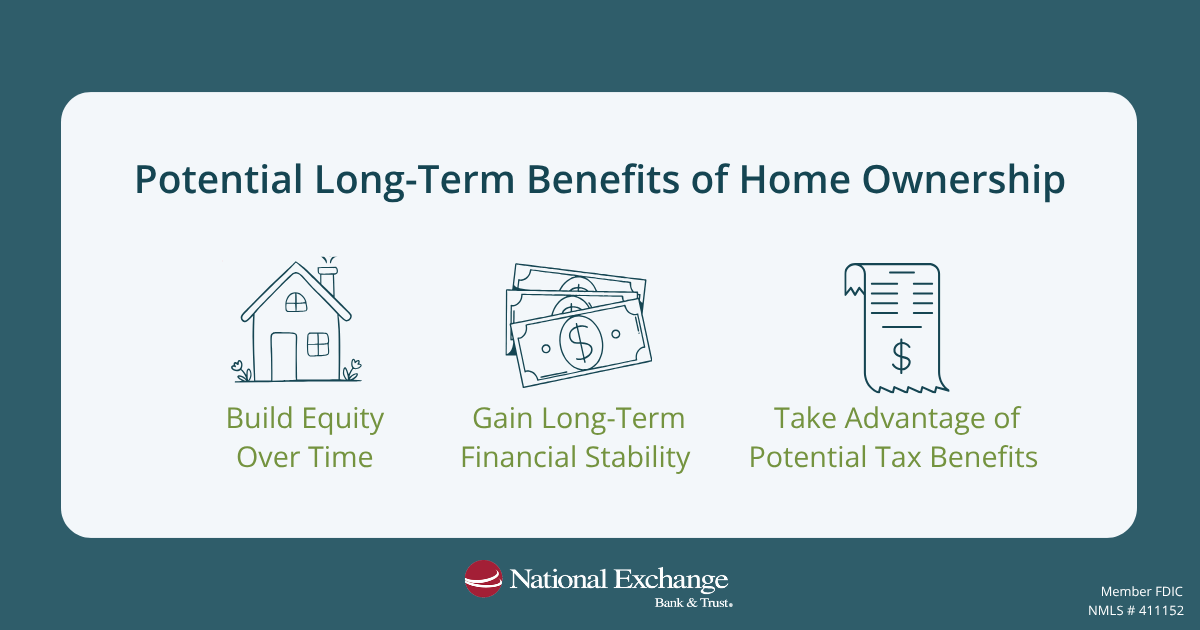
Build Equity Over Time
As your loan balance decreases and the value of your home has the potential to appreciate over time, your equity grows. That equity becomes a financial asset you can draw on through a home equity loan or home equity line of credit, a down payment on your next home purchase or simply cash out if you sell.
Gain Long-Term Financial Stability
A fixed-rate home mortgage means your principal and interest payment stays the same for the life of the loan. However, total monthly housing costs may vary over time due to changes in property taxes, insurance, escrow amounts, and other expenses. Renters have no such guarantee. Rising rent payments can outpace income, making long-term financial planning harder. Homeowners with fixed principal and interest payments can benefit from greater predictability over time.
Take Advantage of Potential Tax Benefits
Homeownership comes with potential tax advantages. Mortgage interest and property taxes may be deductible, depending on your situation - consult a tax professional to take advantage of applicable tax benefits.
Work With a Trusted Local Mortgage Lender
Choosing the right lender streamlines the homebuying process. A local mortgage lender can help you understand your financing options, answer questions and guide you through every step of buying a home.
Whether you are preparing to buy a home for the first time or making your next move, the NEBAT local lending team is ready to help you get there. Explore home mortgage options or reach out to a lender to start the conversation today.
