

 Loading

December is National Giving Month, a time when generosity takes the stage. Giving feels good, especially during the holidays. It’s a way to make a difference, spread kindness and support causes close to your heart. But what if your gift never reaches the people who you intended it for?
Charity scams are on the rise, and scammers know exactly when to strike – during seasons of generosity and moments of crisis. The good news is, a few simple steps can help you protect your donations and ensure your kindness truly makes an impact this holiday season.
Before You Give
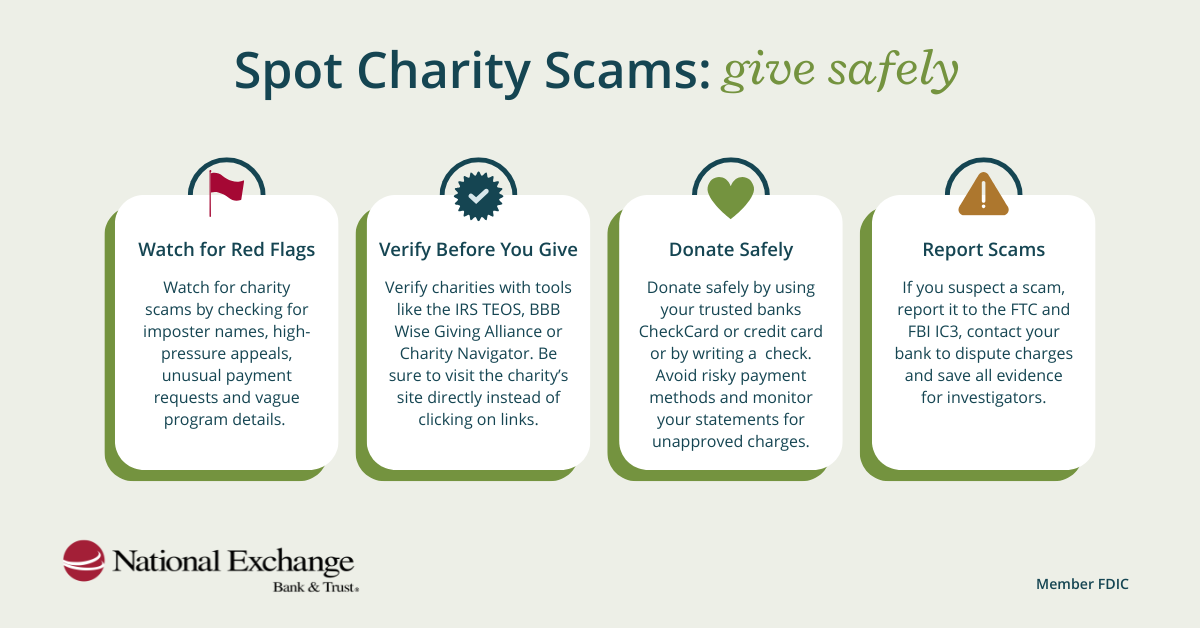
Before you donate, take time to confirm the charity is legitimate. Scammers often rely on urgency and trust to bypass verification, so slowing down is your best defense.
Here’s how to verify:
- Check tax-exempt status using the IRS Tax Exempt Organization Search (TEOS). This ensures your donation is going to a recognized nonprofit and may qualify for tax deductions.
- Review ratings on BBB Wise Giving Alliance or Charity Navigator. These sites provide transparency on how charities use funds and whether they meet accountability standards.
- Go direct by typing the charity’s official URL yourself.
Watch for Red Flags
Scammers use emotional appeals and urgency to pressure donors into acting fast. If something feels off, trust your instincts.
Warning signs include:
- Imposter names: Fraudsters create charities with names similar to well-known organizations to confuse donors. Always double-check the exact name and website before giving.
- Pressure and emotion: Phrases like, “Donate now, lives are at risk” are designed to make you act.
- Unusual payment requests: Legitimate charities rarely ask for gift cards, wire transfers or cryptocurrency.
- Vague program details: Real charities provide clear information about their mission and how donations are used. If details are missing, it’s a red flag.
Choose Safe Ways to Donate
Even when you’ve verified a charity, how you donate matters. Using secure payment methods protects you from fraud and gives you recourse if something goes wrong.
Follow these tips to ensure you donate safely and keep your financial information secure:
- Use your trusted bank cards or checks for dispute protection.
- Keep receipts and monitor your statements for unauthorized charges or recurring donations you did not approve.
- Donate directly through the charity’s official site, not through links in emails or social media messages.
- Set up card controls and alerts for extra peace of mind! These tools allow you to manage spending limits, receive transaction notifications and even turn your card on or off if you suspect fraud.
What to Do If You’ve Been Scammed
If you suspect you’ve donated to a fake charity, act quickly. The sooner you report, the better your chances of recovering funds and preventing further fraud.
- Report the incident to the FTC and FBI IC3.
- Contact your bank to dispute charges and monitor your accounts.
- Save all evidence including emails, texts, receipts and URLs for investigators.
Giving should feel good – and safe! With these tips in mind, you can protect your generosity and make sure your donations reach the intended recipient.
Your security matters to us. Scams like these don’t just take your money – they take away trust and the joy you get from giving. At National Exchange Bank & Trust, our goal is to help you give confidently, knowing you’re supporting real causes and keeping your financial information safe. Together, we can make generosity safer for everyone!
Charity Scams FAQs
How do I know if a charity is real?
Verify the charity’s tax-exempt status using the IRS Tax Exempt Organization Search (TEOS). Check ratings and accountability reports on BBB Wise Giving Alliance and Charity Navigator. Look for clear program details and financial transparency on the charity’s official website.
What payment methods are safest when donating?
Use your trusted bank’s CheckCard or credit card or write a check for added security and dispute protection. Avoid gift cards, wire transfers and cryptocurrency; these are common scam payment methods and are hard to trace or recover.
Is it safe to donate through social media or crowdfunding?
Only if you confirm the charity’s official page and URL. Impersonation is common on social platforms, so be sure to type the charity’s official website address into your browser instead of clicking links in messages or posts.
What should I do if I donated to a scam charity?
Report the incident to the FTC and the FBI IC3. Then contact your bank to dispute charges and monitor your accounts. Save all evidence including emails, texts, receipts and URLs for the investigators.
